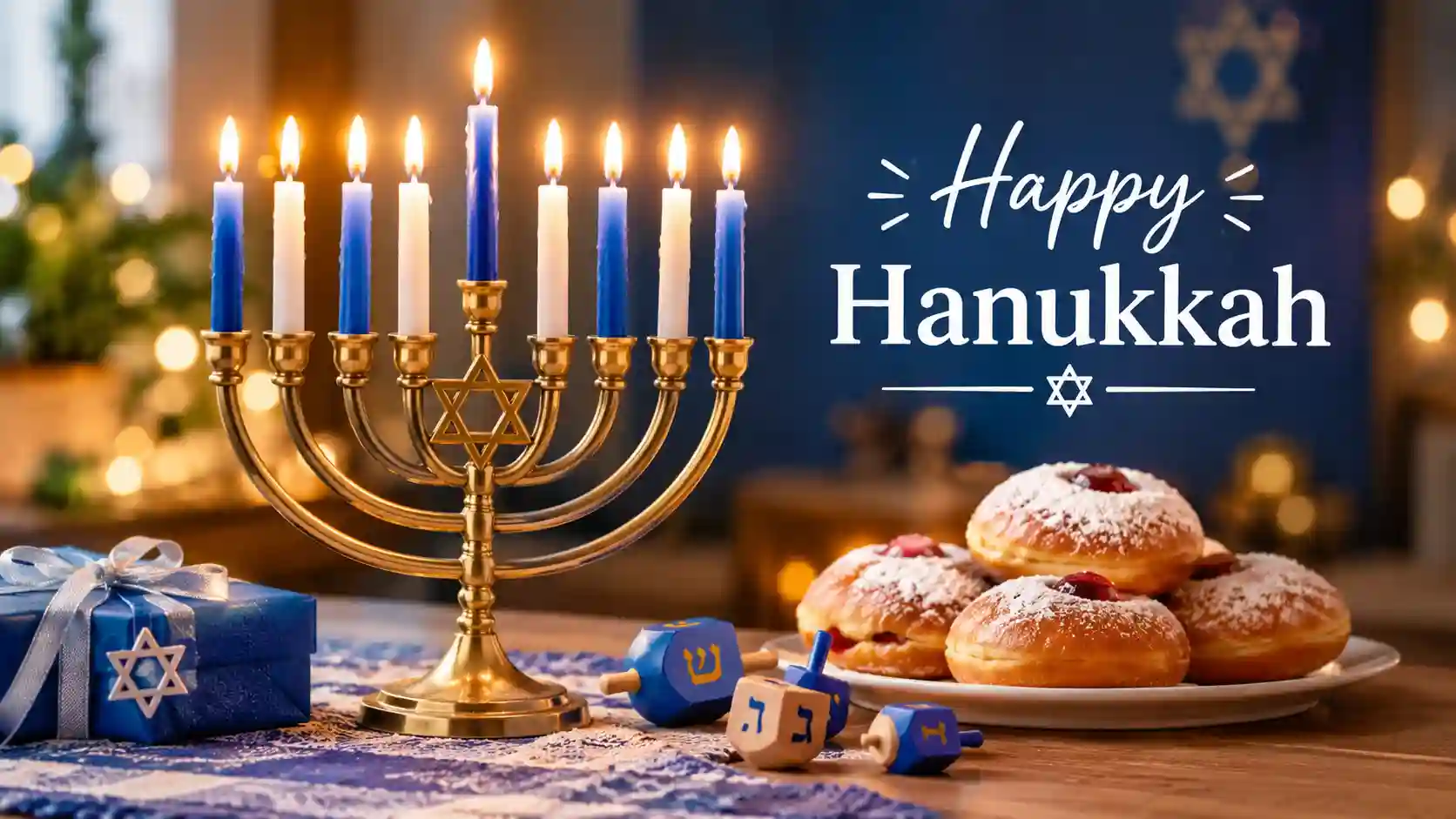
Happy Hanukkah is a joyful Jewish holiday filled with light, family, faith, and hope. Also called the Festival of Lights, it lasts for eight nights and honors the rededication of the Jewish Temple in Jerusalem. Families celebrate by lighting candles, sharing special foods, playing dreidel, singing songs, and spending time together.
Whether you celebrate Hanukkah yourself or want to send warm wishes to a Jewish friend, neighbor, coworker, or loved one, understanding the holiday can help you share a more meaningful message.
In this guide, you will discover what Hanukkah means, when it takes place, its most loved traditions, traditional blessings, thoughtful greetings, and simple ways to join in the spirit of the season with respect.
What Is Hanukkah?
Hanukkah is an eight-day Jewish holiday that celebrates religious freedom, faith, courage, and the rededication of the Second Temple in Jerusalem. The holiday begins on the 25th day of Kislev in the Hebrew calendar, which usually falls in November or December.
The word Hanukkah is often translated as “dedication.” It refers to the rededication of the Temple after Jewish rebels, known as the Maccabees, regained control of it in the second century BCE.
Hanukkah is best known for its nightly candle-lighting ceremony. Each evening, families light an additional candle on a special candleholder called a hanukkiah, commonly known as a Hanukkah menorah.
The growing light serves as a reminder of hope, perseverance, and the importance of keeping traditions alive.
Hanukkah is not the Jewish New Year. It is also not the holiest holiday in Judaism, although it has become a widely loved celebration in Jewish communities around the world.
When Is Hanukkah in 2026?
Hanukkah in 2026 begins at sundown on Friday, December 4, and ends at nightfall on Saturday, December 12. The holiday follows the Hebrew calendar, so its dates change on the Gregorian calendar each year.
Here is a quick look at the 2026 dates.
| Detail | Date |
| First night | Friday, December 4, 2026 |
| Eight nights | December 4–11 |
| Final day | Saturday, December 12 |
| Main tradition | Lighting the Hanukkah candles each night |
Because the first night falls on a Friday, candle-lighting customs require special attention. Hanukkah candles are traditionally lit before Shabbat candles on Friday evening. Families should follow their local candle-lighting times and the practices of their Jewish community.
Helpful tip: If you plan to send Hanukkah cards, arrange a visit, or deliver a gift, consider doing so before the holiday begins. This gives your loved ones time to enjoy your message during their celebration.
Why Is Hanukkah Celebrated for Eight Nights?
Hanukkah commemorates the Maccabean victory and the rededication of the Temple in Jerusalem. Jewish tradition also tells the story of a small amount of consecrated oil that lasted for eight days when there was only enough for one day.
The eight nights of Hanukkah are closely connected to this traditional story of the oil. The increasing candlelight represents hope that continues to grow, even when circumstances seem difficult.
The holiday also honors the courage of people who stood up for their religious practices and identity.
For many families, Hanukkah is a time to reflect on questions such as:
- How can we keep hope alive during difficult times?
- How can we protect the traditions that matter to us?
- How can we bring more kindness and light into our communities?
- How can we teach children about courage, gratitude, and faith?
These lessons make Hanukkah meaningful across generations. It is a celebration of Jewish history and faith, as well as a reminder of the value of freedom and perseverance.
What Are the Main Hanukkah Traditions?
Hanukkah traditions bring families and communities together. Although customs vary between Jewish households, several practices are widely recognized.
1. Lighting the Hanukkah Menorah
Candle lighting is the central Hanukkah tradition. A hanukkiah has nine branches: eight for the holiday nights and one for the shamash, or helper candle, which is used to light the others.
One candle is lit on the first night, two on the second, and so on until all eight holiday lights are burning on the final night.
Families often gather around the candles, recite blessings, sing songs, and reflect on the meaning of the holiday.
The candles are generally placed from right to left, while the newest candle is lit first. Customs can vary, so families may follow the guidance of their own community.
2. Playing Dreidel
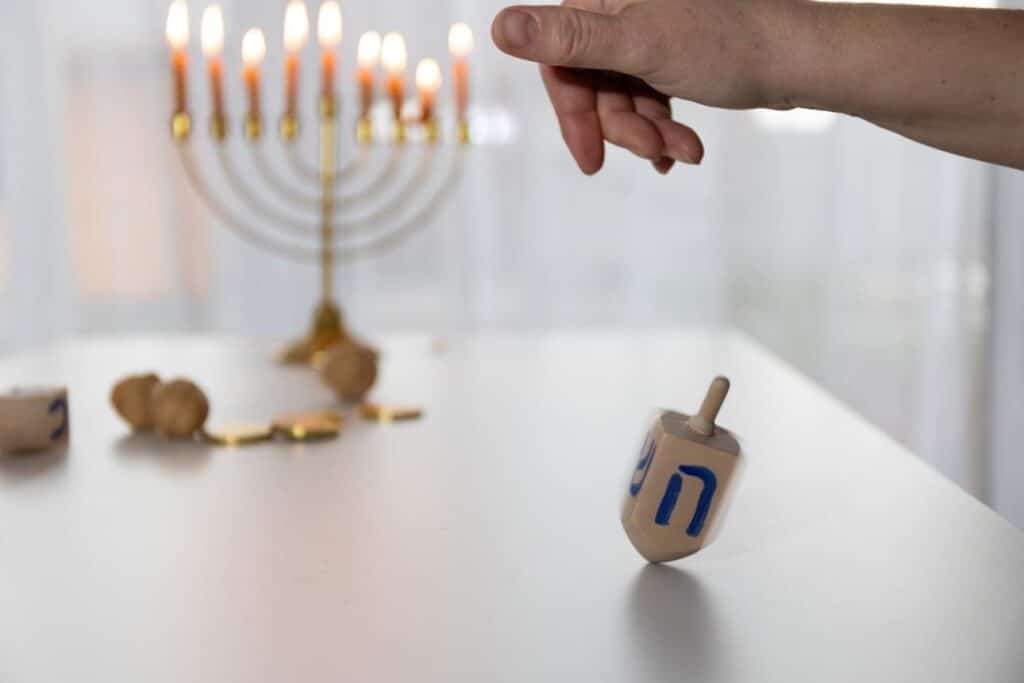
A dreidel is a four-sided spinning top with Hebrew letters on its sides. It is a popular Hanukkah game, especially for children.
Players take turns spinning the dreidel. Depending on the letter it lands on, they may take from the shared pot, add to it, or do nothing.
Chocolate coins, nuts, or other small treats can be used as game pieces.
Dreidel is a simple way to bring laughter into a family gathering and help children connect with Hanukkah traditions.
3. Singing Hanukkah Songs
Music is another cherished part of the celebration. Some families sing traditional Hebrew songs after lighting the candles, while others enjoy familiar Hanukkah songs in their preferred language.
Songs can help children learn about the holiday and create happy memories with parents, grandparents, and relatives.
4. Giving Hanukkah Gelt
Hanukkah gelt refers to money or chocolate coins given during the holiday. It is especially popular with children.
Some families use gelt during dreidel games, while others give it as a small gift. The tradition can also provide an opportunity to talk about generosity and giving to people in need.
My Jewish Learning
+1
5. Spending Time With Family and Community
Hanukkah is often celebrated at home, but community gatherings can be just as meaningful. Families may invite friends for dinner, attend public menorah lightings, share music, or take part in events at a synagogue or community center.
There is no single way every family celebrates. Some gatherings are large and lively, while others are quiet and personal.
The most important thing is to honor the traditions and values that make the holiday meaningful to those celebrating it.
What Are Traditional Hanukkah Foods?
Food is an important part of many Hanukkah celebrations. Several traditional dishes are fried in oil to recall the story of the oil associated with the holiday.
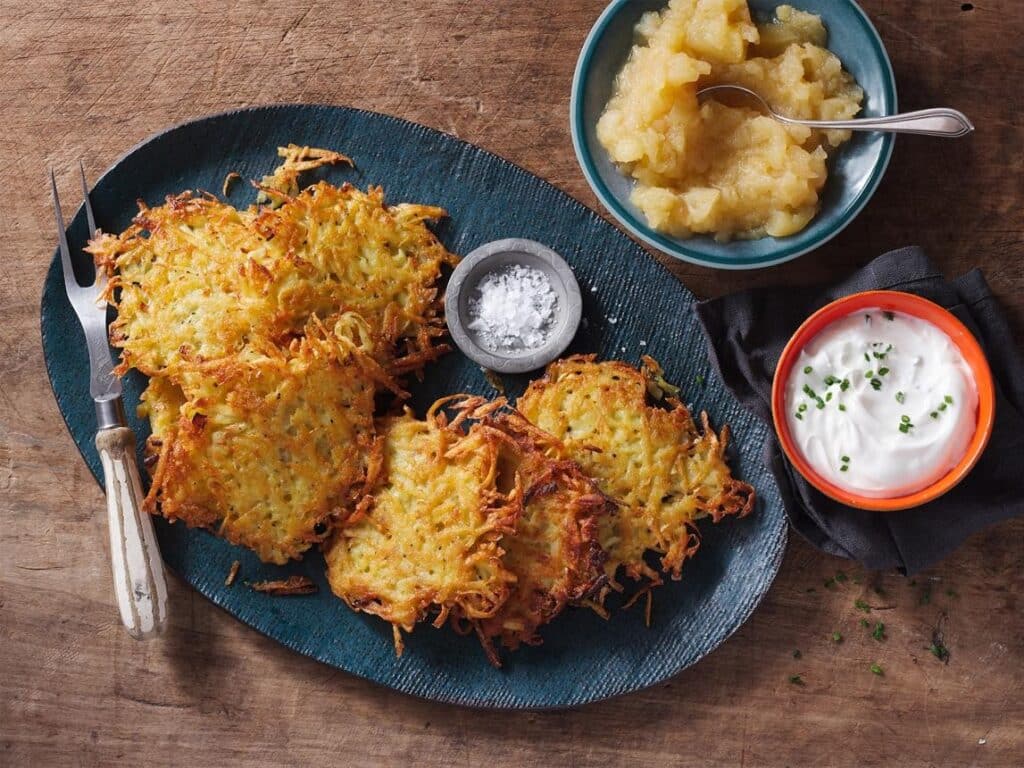
Latkes
These crispy potato pancakes are popular in many Ashkenazi Jewish households. They are often served with applesauce or sour cream.
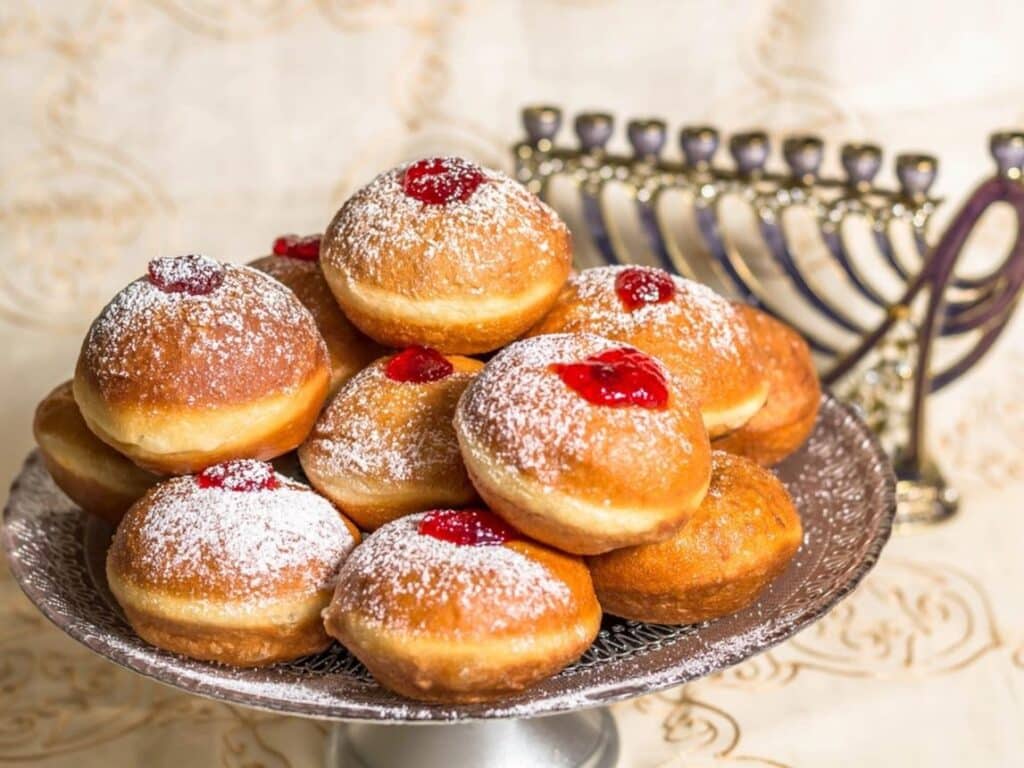
Sufganiyot
These soft, jelly-filled doughnuts are especially popular in Israel and many other Jewish communities.
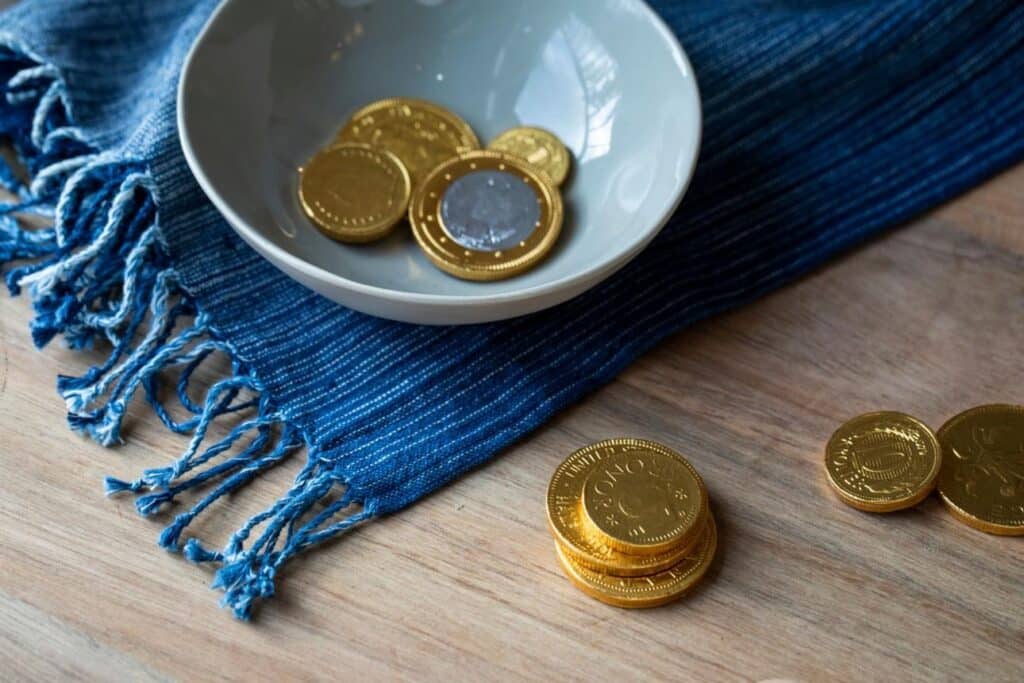
Chocolate gelt
Chocolate coins add a sweet touch to holiday gatherings and are often used during dreidel games.
Other foods may include cheese dishes, fried vegetables, and family recipes passed down through generations.
Food traditions vary by region and family. If you are hosting a Hanukkah meal, ask your guests about dietary needs rather than assuming that one menu suits everyone.
What Are Some Happy Hanukkah Wishes and Greetings?
A thoughtful Hanukkah greeting does not need to be long. A few warm words can show that you care and respect the holiday.
Here are original messages you can share in a card, text, email, or social media post.
Short and Sweet Hanukkah Wishes
- Happy Hanukkah! May your home be filled with light, love, and laughter.
- Wishing you eight beautiful nights of peace, joy, and togetherness.
- May the lights of Hanukkah bring hope and happiness to your heart.
- Happy Hanukkah to you and your family. May this season bring many blessings.
- Wishing you warmth, sweet memories, and a bright Hanukkah celebration.
- May each candle bring a little more joy into your home. Happy Hanukkah!
- Sending you love and warm wishes for a wonderful Hanukkah.
- May your holiday shine with kindness, peace, and family love.
Traditional Hanukkah Greetings
You can also use greetings that are commonly associated with the holiday.
- Happy Hanukkah! — A familiar and friendly English greeting.
- Hanukkah Sameach! — A Hebrew greeting meaning “Happy Hanukkah.”
- Chag Sameach! — A Hebrew greeting meaning “Happy holiday.”
These greetings work well in cards, text messages, and face-to-face conversations.
Hanukkah Wishes for Friends
- Happy Hanukkah, my friend! May these eight nights bring you peace, laughter, and beautiful memories.
- Wishing you a bright holiday filled with good food, warm company, and plenty of smiles.
- May your Hanukkah be as wonderful as the friendship we share. Sending you lots of love!
- I hope this season brings you fresh hope, happy moments, and reasons to be thankful.
- Wishing you and your loved ones a joyful Hanukkah filled with warmth and light.
Hanukkah Wishes for Family
- Happy Hanukkah to our wonderful family! May our home always be filled with love, kindness, and understanding.
- May these eight nights bring us closer and remind us how lucky we are to have one another.
- Wishing our family a peaceful Hanukkah filled with meaningful traditions and sweet memories.
- May the light of every candle remind us to care for one another and cherish the time we share.
- Sending warm Hanukkah wishes to every member of our family, near and far.
Professional Hanukkah Wishes for Coworkers and Clients
- Wishing you and your family a happy Hanukkah filled with peace, joy, and meaningful moments.
- Happy Hanukkah! May this holiday bring you happiness and a wonderful time with loved ones.
- Warm wishes to you and your family for a peaceful and joyful Hanukkah.
- May this season of light bring hope, happiness, and new opportunities. Happy Hanukkah!
- Wishing you a lovely Hanukkah and a holiday season filled with warmth and goodwill.
Best tip: For a professional greeting, keep the message friendly and inclusive. You do not need to mention religion or make assumptions about how someone observes the holiday.
How Do You Wish Someone a Happy Hanukkah?
The best Hanukkah greeting is sincere, simple, and respectful. You do not have to know every detail of Jewish tradition to show that you care.
Here are a few easy guidelines.
- Use their preferred greeting. “Happy Hanukkah” is a safe and widely understood choice.
- Make it personal. Mention their family, a shared memory, or your hope for their happiness.
- Respect different traditions. Some people celebrate every night, while others observe the holiday in a quieter way.
- Avoid assumptions. Do not assume that every Jewish person celebrates Hanukkah or follows the same customs.
- Send your wishes at a thoughtful time. A message before the holiday or during the eight nights is appropriate.
If you are unsure what to write, try this:
“Happy Hanukkah! Wishing you and your loved ones eight nights of peace, happiness, and meaningful time together.”
This message is warm, respectful, and suitable for most personal or professional relationships.
When Is Hanukkah 2026? Dates and First Night
Hanukkah 2026 begins at sundown on Friday, December 4, and ends at nightfall on Saturday, December 12. The first candle is lit on the evening of December 4, before Shabbat candles are lit.
Hanukkah 2026 Dates at a Glance
| Occasion | Date |
| First night of Hanukkah 2026 | Friday, December 4, after sunset timing considerations |
| First daytime date | Saturday, December 5 |
| Eighth night | Friday, December 11 |
| Final day | Saturday, December 12, ending at nightfall |
Jewish holidays begin at sundown, so the first night of Hanukkah takes place before the first full daytime date. Since the first night in 2026 coincides with Friday evening, families should follow their local Jewish calendar for the correct candle-lighting time.
When Is Hanukkah This Year?
In 2026, Hanukkah begins on December 4 at sundown. If you are planning a greeting, family gathering, or gift, remember that the holiday continues for eight nights.
Happy Hanukkah 2026: When Should You Send Your Wishes?
You can send Happy Hanukkah 2026 wishes before the holiday begins or during its eight nights. A message sent on the first evening is a lovely way to share in the celebration.
For example:
“Happy Hanukkah 2026! May these eight nights bring you and your family peace, joy, and beautiful memories.”
When Does Hanukkah Start in 2026?
Hanukkah starts at sundown on December 4, 2026. Its date changes each year because the Jewish calendar follows a different system from the Gregorian calendar used for everyday dates in many countries.
First Night of Hanukkah 2025: What Was the Date?
The first night of Hanukkah in 2025 began at sundown on Sunday, December 14, and the holiday ended at nightfall on Monday, December 22. These dates are useful for readers searching for the previous year’s celebration.
What Is a Hanukkah Prayer? Traditional Blessings Explained
Hanukkah prayers are an important part of the candle-lighting ceremony. Traditionally, two blessings are recited before lighting the candles on most nights. On the first night, a third blessing is added to express gratitude for reaching the occasion.
The exact customs and pronunciation can vary between Jewish communities.
What Are the Three Hanukkah Blessings?
The three traditional blessings are:
- The blessing for lighting the Hanukkah candles. This thanks God for the commandment to kindle the holiday lights.
- The blessing for the miracles. This expresses gratitude for the miracles remembered during Hanukkah.
- The Shehecheyanu blessing. This thanks God for granting life and allowing people to reach this special occasion. It is traditionally recited on the first night, or the first time the blessings are said that season.
The first two blessings are recited each night, while the third is normally added on the first night. Families can consult a trusted Jewish prayer book or rabbi for the complete Hebrew text, pronunciation, and guidance.
What Are Hanukkah Blessings for Family and Friends?
If you want a warm, non-liturgical blessing to share in a card or message, try one of these original greetings:
- May the lights of Hanukkah fill your home with peace, hope, and love.
- May your family enjoy eight nights of happiness, gratitude, and togetherness.
- May this Festival of Lights bring comfort in difficult times and joy in good ones.
- Wishing you a Hanukkah filled with kindness, meaningful traditions, and treasured memories.
These are personal holiday messages, not traditional Jewish liturgical prayers.
What Night of Hanukkah Is It Today?
To find the current night of Hanukkah, first check whether the holiday is taking place in the current year. Hanukkah begins at sundown and lasts eight nights, with one additional candle lit on each successive evening.
For 2026, the first night is December 4, the second night is December 5, and the eighth night is December 11. The holiday concludes at nightfall on December 12.
Outside these dates, Hanukkah is not being observed. If you are checking a date near sunset, use a local Jewish calendar because the Jewish day begins in the evening.
What Is the Hanukkah Story?
The Hanukkah story goes back more than 2,000 years, to a time when Jewish religious practices were restricted under the rule of the Seleucid king Antiochus IV.
A Jewish resistance movement led by Judah Maccabee and his followers fought against the ruling forces. After regaining control of Jerusalem, they rededicated the Second Temple.
Jewish tradition connects this rededication with the story of a small supply of sacred oil that lasted for eight days. This story helps explain why Hanukkah is known as the Festival of Lights and why candles are central to its celebration.
Today, the holiday reminds many Jewish families of religious freedom, courage, faith, and the power of hope during difficult times.
What Is Hanukkah in the Bible?
Hanukkah is not described as a festival in the Hebrew Bible in the same way as holidays established in the Torah. Its historical background is recorded in the books of 1 and 2 Maccabees, which are included in Catholic and Orthodox biblical traditions but not in the Jewish Tanakh or most Protestant biblical canons.
Hanukkah is also connected to the New Testament through the Feast of Dedication in John 10:22, which takes place in Jerusalem during winter. This passage refers to a festival associated with the rededication of the Temple.
The biblical references help readers understand the historical and religious background of the holiday, although Jewish and Christian traditions differ in how they interpret these texts.
Did Jesus Celebrate Hanukkah?
The Gospel of John mentions Jesus in Jerusalem during the Feast of Dedication in John 10:22–23. This festival is commonly identified with Hanukkah.
The passage says that Jesus was walking in the Temple area during the festival. However, it does not provide a detailed account of how he observed the holiday or establish every aspect of his personal practice.
For Christian readers, this passage offers a connection between Jesus and the historical setting of Hanukkah. For Jewish readers, the holiday remains a celebration of Jewish history, religious identity, and the rededication of the Temple.
Is Hanukkah Like Christmas?
Hanukkah and Christmas both take place in the winter in many years, and both can involve family gatherings, special meals, decorations, and gift-giving. However, they are different holidays with distinct religious meanings.
| Feature | Hanukkah | Christmas |
| Religious tradition | Judaism | Christianity |
| Main meaning | Commemorates the rededication of the Temple and celebrates Jewish religious freedom | Celebrates the birth of Jesus Christ |
| Usual duration | Eight nights | Christmas Day, with different seasonal observances |
| Common traditions | Lighting a hanukkiah, playing dreidel, eating traditional foods | Christmas trees, nativity displays, carols, and gift-giving |
| Calendar dates | Vary each year | December 25 in most Western Christian traditions |
Although some customs may look similar, Hanukkah is not the Jewish version of Christmas. Each holiday deserves to be understood and appreciated on its own terms.
What Is the Hanukkah Star?
The symbol often called the Hanukkah star is the Star of David, a six-pointed star that is widely recognized as a symbol of Jewish identity.
It may appear on Hanukkah decorations, greeting cards, wrapping paper, and festive displays. However, it is not the central ritual symbol of Hanukkah.
The most closely associated symbol of the holiday is the hanukkiah, the nine-branched candleholder used during the eight nights of celebration. The Star of David can appear alongside it as a broader Jewish symbol.
If you are choosing a Hanukkah card or feature image, a hanukkiah with glowing candles is a particularly clear and recognizable choice.
What Is Not Allowed on Hanukkah?
There is no universal list of activities that every Jewish person must avoid during Hanukkah. In traditional Jewish practice, Hanukkah is generally a holiday on which ordinary work is permitted, unlike Shabbat. However, customs and personal observance vary.
Here are a few important points:
- Work and school: These are generally permitted during Hanukkah, except where Shabbat or other applicable religious requirements affect the schedule.
- Candle safety: Hanukkah candles should be placed securely and watched appropriately. The ritual lights are traditionally not used for ordinary tasks such as reading or working.
- Food choices: Dietary rules differ by household. Ask your host about kosher food requirements rather than making assumptions.
- Religious customs: Guests should follow their host’s guidance during prayers and candle lighting.
- Personal observance: Some people celebrate every night, while others observe the holiday in a simpler or less religious way.
For specific religious rulings, families may consult their rabbi or trusted Jewish authority.
How Can You Celebrate Hanukkah at Home?
You do not need an elaborate party to create a memorable celebration. Small, thoughtful activities can make the holiday feel special.
Here are a few ideas for families and invited guests.
Create a Warm Gathering Space
Prepare a comfortable place where family and friends can sit together. You can add seasonal decorations, set the table, and make room for traditional foods.
If you are using candles, follow appropriate fire-safety guidance and keep them away from children, pets, curtains, and other flammable objects.
Share a Family Meal
Prepare latkes, sufganiyot, or another dish your guests enjoy. If you are inviting a Jewish friend, ask whether they have any food preferences or dietary requirements.
You can also invite guests to share a favorite holiday memory or family recipe.
Plan Activities for Children
Children may enjoy playing dreidel, making greeting cards, learning a Hanukkah song, or reading a story about the holiday.
Keep the activities simple so that children can join in without feeling overwhelmed.
Practice Kindness and Giving
Hanukkah can be a good time to talk about generosity. Families might donate to a local food bank, help a neighbor, or choose a cause that matters to them.
These acts do not replace the holiday’s religious traditions. They are simply ways to put values such as compassion and community into practice.
Learn Before You Join In
If you are a guest at a Hanukkah gathering, ask your host how you can participate respectfully. You may be invited to enjoy the food, watch the candle-lighting ceremony, or join in a game.
Being curious, considerate, and willing to learn is often more meaningful than trying to get every detail right.
What Gifts Are Appropriate for Hanukkah?
Hanukkah gifts can be simple and thoughtful. There is no single gift that every person expects, and gift-giving customs differ between families.
Some suitable ideas include:
- A box of chocolates or another treat, after checking dietary needs.
- A book chosen for the recipient’s interests.
- A family game or a dreidel set.
- A handwritten holiday card.
- A small donation to a charity the recipient supports.
- A useful gift related to a hobby or shared interest.
If you are buying a gift for a coworker or business contact, choose something modest and appropriate for your relationship.
A personal note can make even a small gift feel special. For example:
“Wishing you a bright and happy Hanukkah. I hope this little gift brings a smile to your holiday.”
The thought behind a gift matters more than its price.
Hanukkah Etiquette: What Should You Keep in Mind?
If you are unfamiliar with Hanukkah, a little preparation can help you avoid common mistakes.
Do:
- Offer a warm greeting without expecting a particular response.
- Ask questions politely if your host welcomes them.
- Follow your host’s lead during religious customs.
- Respect the meaning of the holiday and its connection to Jewish history.
- Remember that individual observance varies.
Don’t:
- Assume Hanukkah is simply the Jewish version of Christmas.
- Expect everyone to exchange gifts or attend parties.
- Treat religious symbols as props without understanding their meaning.
- Assume all Jewish people share the same beliefs or customs.
- Pressure someone to explain or defend their faith.
Hanukkah has its own history, rituals, and religious meaning. Respecting those differences is an important part of celebrating with friends and neighbors.
My Jewish Learning
+1
Frequently Asked Questions About Hanukkah
1. What does Hanukkah mean?
Hanukkah is commonly translated as “dedication.” The name refers to the rededication of the Second Temple in Jerusalem after the Maccabees regained control of it.
2. How long does Hanukkah last?
Hanukkah lasts eight nights and eight days. Families traditionally light an additional candle on each successive night.
3. When does Hanukkah start in 2026?
Hanukkah begins at sundown on Friday, December 4, 2026, and ends at nightfall on Saturday, December 12, 2026.
Chabad
+1
4. What is the correct way to say Happy Hanukkah?
“Happy Hanukkah” is a common English greeting. You can also say “Hanukkah Sameach,” which means “Happy Hanukkah” in Hebrew.
5. Why does Hanukkah last eight nights?
Jewish tradition tells of a small amount of oil that lasted eight days in the Temple after its rededication. The eight-night celebration is closely associated with this story.
6. What is the difference between a menorah and a hanukkiah?
A traditional menorah has seven branches and is associated with the ancient Temple. A hanukkiah is the nine-branched candleholder used for Hanukkah, with eight lights for the holiday and one helper light.
In everyday English, many people call the Hanukkah candleholder a menorah.
My Jewish Learning
+1
7. What foods are eaten during Hanukkah?
Popular foods include latkes, or potato pancakes, and sufganiyot, or jelly-filled doughnuts. Many traditional dishes are fried in oil to recall the Hanukkah story.
8. Is Hanukkah a major Jewish holiday?
Hanukkah is a beloved and widely celebrated Jewish holiday, but it is not among Judaism’s holiest holidays. Its importance comes from its history, religious meaning, and family and community traditions.
My Jewish Learning
+1
9. Do people give gifts on all eight nights of Hanukkah?
Some families exchange gifts during several nights, while others give smaller presents, money, or no gifts at all. Gift-giving customs vary, and it is not a requirement for everyone.
10. Is it appropriate for non-Jewish people to celebrate Hanukkah?
Non-Jewish friends, neighbors, and coworkers can respectfully join a celebration when invited. Learning about the holiday, following the host’s guidance, and treating its religious traditions with care are good places to start.
Conclusion: Share the Light of Hanukkah
Hanukkah is a celebration of faith, courage, freedom, family, and hope. From lighting the hanukkiah to enjoying traditional foods and sharing warm greetings, each tradition offers a way to connect with the holiday’s meaning.
Whether you are celebrating with loved ones or sending a message to someone special, thoughtful words can help make the season brighter.
If you want to keep your greeting simple, remember these three words: Happy Hanukkah! A sincere message of peace, joy, and togetherness is a wonderful way to honor the occasion.
May Hanukkah bring light to your home, kindness to your community, and hope for the days ahead.

I founded WishesDesk to create heartfelt birthday wishes, messages, greetings, and quotes that help people celebrate every occasion with meaningful words and lasting memories. My goal is to help people express their emotions with meaningful words and make every celebration more memorable.